
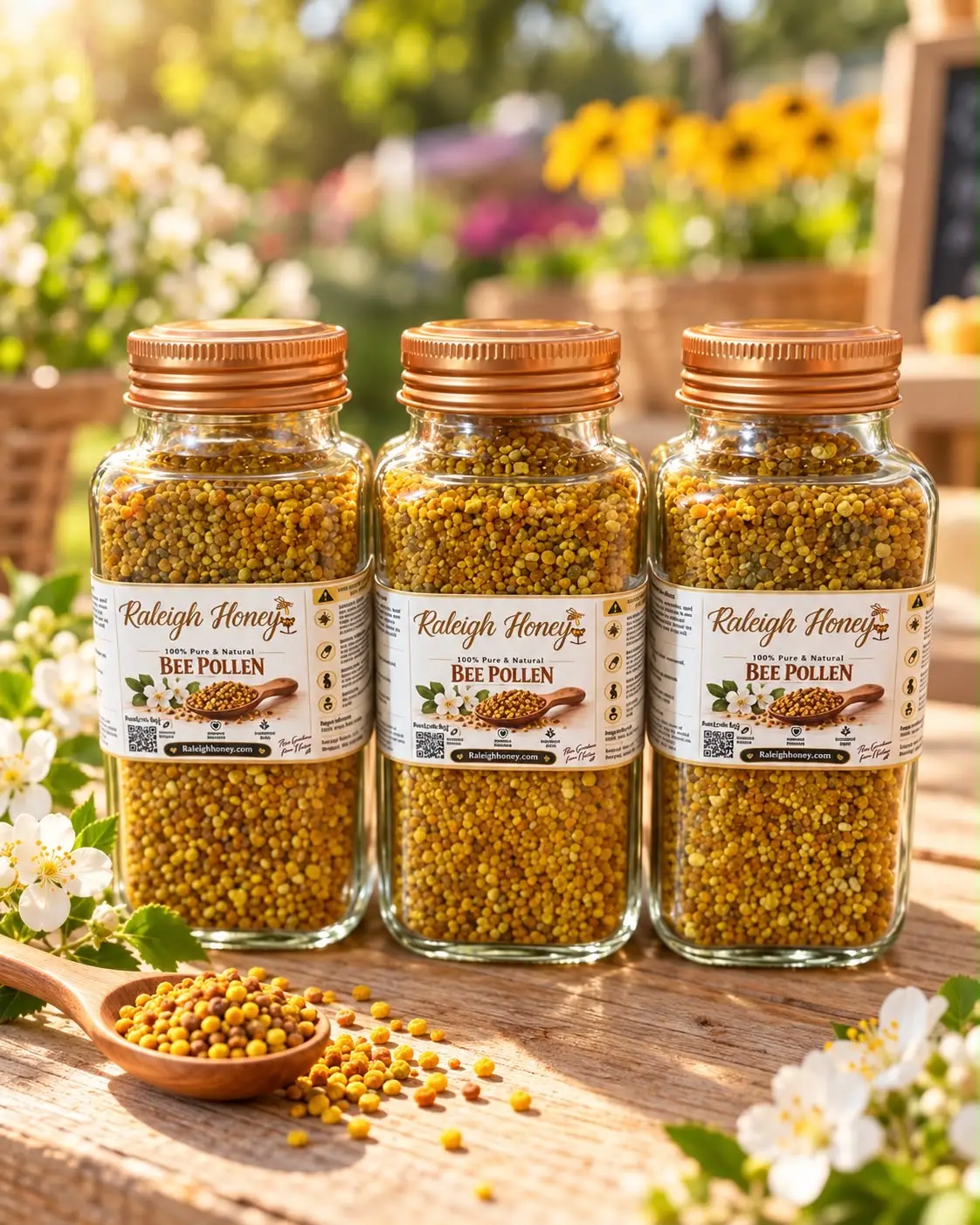
Bee pollen is often called
“nature’s superfood”
because it is a nutrient-dense powerhouse packed by worker bees. Here is a breakdown of what it offers, how to incorporate it into your routine, and important safety warnings to keep in mind.
Key Benefits
Nutritional Powerhouse: It contains a remarkably wide array of nutrients, including proteins, free amino acids, B vitamins, Vitamin C, Vitamin E, carotenoids, and dozens of minerals (like iron, zinc, and magnesium).
Immune & Antioxidant Support:
Bee pollen is rich in flavonoids, carotenoids, and phytosterols, which act as powerful antioxidants. These compounds help combat oxidative stress and cellular damage, while supporting overall immune health.
Energy & Stamina: Because of its rich B-vitamin and carbohydrate profile, many people use bee pollen as a natural supplement to help fight fatigue and boost physical stamina.
Inflammation Reduction: Studies suggest that certain compounds in bee pollen have anti-inflammatory properties comparable to some over-the-counter NSAIDs, making it helpful for soothing irritated tissues.
How to Use It
Bee pollen typically comes in small, golden-yellow granules that have a slightly floral, sweet, and nutty flavor. Because it is potent, it’s best to start slow (about a quarter of a teaspoon a day) to see how your body reacts, eventually working up to 1 to 2 tablespoons daily.
Sprinkle on Yogurt or Cereal: Toss a spoonful over Greek yogurt, oatmeal, or your morning cereal for a nutritional boost and a pleasant crunch.
Blend into Smoothies: Mix a tablespoon directly into your favorite fruit or green smoothie.
Stir into Warm (Not Hot) Drinks: Add it to lukewarm tea or warm water with a bit of honey. Tip: Avoid boiling liquids, as extreme heat can degrade the delicate enzymes and vitamins in the pollen.
Mix with Honey: You can combine raw bee pollen granules directly into raw honey for an easy, spreadable superfood blend.
Important Warnings & Precautions
While bee pollen is safe and beneficial for most people, certain precautions are essential:
Allergies: If you are allergic to bee stings, honey, or stinging insects (like wasps or hornets), or if you suffer from severe seasonal pollen allergies, exercise extreme caution. Bee pollen can trigger severe allergic reactions—ranging from itching and swelling to shortness of breath or anaphylaxis in sensitive individuals. Always start with just a few granules to test your tolerance.
Pregnancy and Breastfeeding: There is not enough reliable clinical data to guarantee the safety of bee pollen during pregnancy or while breastfeeding, so it is best to avoid it or consult a healthcare provider first.
Blood Thinners: Bee pollen may interact with certain medications, particularly blood thinners (like warfarin), potentially increasing the risk of bruising or bleeding.


Reviews
There are no reviews yet.