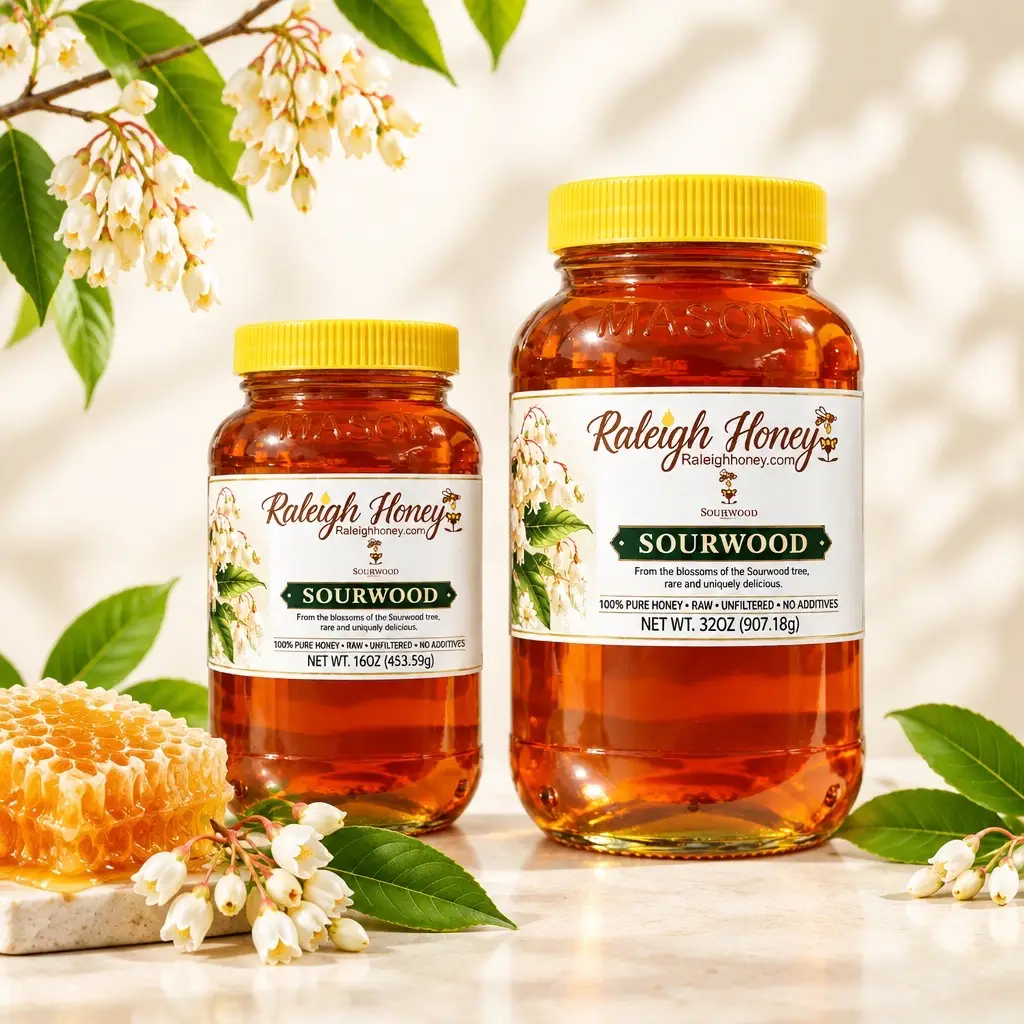
What is Sourwood Honey?
- Source: It is a mono-floral honey, meaning the bees primarily collect nectar from the white, fragrant blossoms of the Sourwood tree (Oxydendrum arboreum).
- Origin: The Sourwood tree is native to the Eastern United States, particularly the Appalachian Mountains (North Carolina, Georgia, and Tennessee). Its limited growing region and short blooming season (late June to July) contribute to its rarity and high value.
- Appearance: It typically has a beautiful light amber to golden color and is known for its smooth, velvety, or buttery texture that resists crystallization (sugaring) longer than many other honey types.
- Flavor Profile: Despite the name of the tree, the honey is not sour. Its flavor is complex, rich, and full-bodied, often described as having notes of:
- Caramel or butterscotch
- Anise or maple
- A hint of spice (like cinnamon or clove)
- It often has a spicy gingerbread aftertaste.
Potential Benefits of Sourwood Honey
Sourwood honey shares many general health benefits common to raw, pure honey, but some sources suggest its specific composition gives it an extra edge:
1. High Antioxidant Content
- Sourwood honey contains significant levels of phenolic compounds and flavonoids, which are powerful antioxidants.
- Antioxidants help fight free radicals in the body, which can contribute to oxidative stress, inflammation, and cellular damage
2. Immune Support and Antibacterial Properties
- Like most raw honey, it possesses natural antibacterial and antimicrobial properties due to its low bm{text{pH}} (acidity) and the presence of enzymes.
- It is often used as a natural remedy to soothe sore throats and suppress coughs, making it popular during cold and flu season
3. Wound Healing and Anti-inflammatory Use
• Historically, honey has been applied topically to minor wounds and burns to aid in healing. Its properties help create an environment inhospitable to bacteria and may reduce inflammation.
- Digestive Health
• Raw honey contains enzymes and is considered a source of prebiotics, which can help nourish beneficial bacteria and support a healthy balance of gut flora. - Potential for Allergy Relief
• Since it contains pollen from the Sourwood tree and surrounding area, consuming local, raw sourwood honey is often suggested to help people suffering from seasonal allergies by exposing the immune system to small amounts of local pollen.
🍽️ Culinary Uses
Sourwood honey’s distinctive flavor makes it excellent for:
• Drizzling: Over biscuits, pancakes, toast, yogurt, or oatmeal.
• Pairing: It pairs beautifully with cheese and charcuterie boards.
• Sweetener: It’s a fantastic natural substitute for refined sugar in tea, coffee, or baked goods.
• Glazes & Sauces: Its caramel notes make it a great addition to glazes for meats or in salad dressings.